Better prompting with Symbol Creator AI
| Site: | Global Symbols Training |
| Course: | Symbol Creator AI |
| Book: | Better prompting with Symbol Creator AI |
| Printed by: | Guest user |
| Date: | Saturday, 24 October 2026, 7:12 AM |
Description
This book covers more in-depth details on how to use your prompt text to achieve the symbol you want.
1. Introduction
This training from Global Symbols focuses on how to write prompts that reliably produce symbols that are usable, accessible and consistent, not just visually appealing.
The better the prompt, the better the result.
2. Why this matters
For many people, symbols are communication. They are the words people want to say and part of how they say them.
Symbols are not just pictures. They are part of a person’s voice. They support everyday communication, participation, identity, and connection.
That is why symbols need to be clear, consistent, and easy to understand. They also need to reflect the person who uses them. Symbols that represent someone’s culture and community can feel more familiar, meaningful, and respectful. They can help people see themselves, their families, and their daily lives in the language they use.
Better prompting helps create symbols that are not only visually strong, but truly useful for communication.
3. Our AI models
Here at Global Symbols we are using the FLUX.1-schnell model.
We use custom LoRA techniques on top of the FLUX.1-shnell output to draw the symbol in a style that matches existing symbol sets. These are unique to Global Symbols.
Its weakness is similar to other models: vague prompts often produce decorative or busy images. This is why prompts need to be precise.
Also, Flux.1 Schnell does not work with negative prompts. You need to describe what you want to appear in the image, and not what you want to omit.
Example
- Prompt with negative items: child eating, no background, no extra objects, no text
- Prompt with positive items: child eating at a plain table, simple white background, single bowl
4. Good Symbols
Before thinking about prompting, it helps to define success.
A good AAC symbol:
- shows one idea clearly
- has strong visual contrast
- has no unnecessary background
- stays readable when reduced to a small size on a grid
- is consistent with the rest of the symbol set
These principles form part of the rules that have been taught to the Global Symbols AI model, but you may sometimes need to adjust your prompt.
5. Symbol Prompting
A structured prompt works best for creating symbols. The most useful sequence is:
Concept → Subject → Action → Style → Composition → Accessibility
An effective AAC symbol prompt includes:
- Concept: what the symbol is about
- Subject: who or what is shown
- Action: what they are doing
- Style: the chosen symbol set or visual style
- Composition: how the image is arranged, including background
- Accessibility: features such as high contrast or a plain background
Accessibility is handled by our AI models but again you might need to adjust your prompt to make improvements if necessary.
6. Actions
If the prompt is simply person drinking, the image may include a whole café scene with tables, windows, shadows and multiple people.
A better AAC prompt would specify:
- An adult or child
- Lifting a cup
You can add more detail as required, such as:
- Sitting in a wheelchair
- At a table
The Global Symbols app also lets you choose:
- A symbol set style
- A culture
The app should ensure that symbols have a white or plain background, and high contrast lines. Note that there is also an option to generate photographic images, which may not need to follow these rules.
Tip: Good symbol prompting is about preventing extra detail from appearing by being precise in what is requested.
7. Example prompts and results
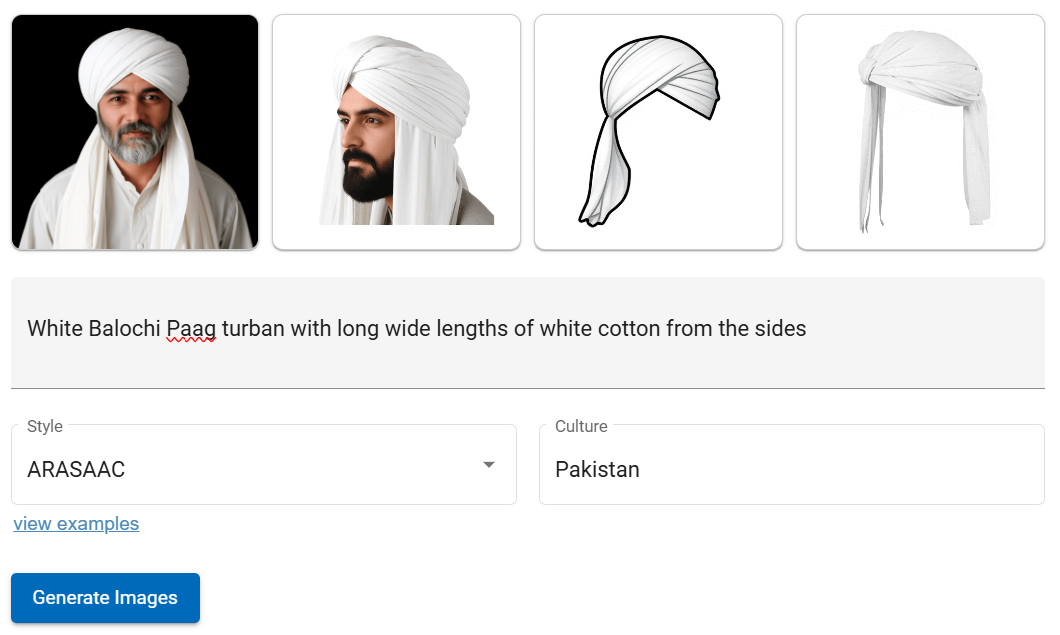
White Balochi Paag turban with long wide lengths of white cotton from the sides, on a table. Culture: Pakistan
Note that sometimes symbols appear as photographs, even when you chose a symbol style. You only need one suitable symbol of the four, so ignore the photographs! -we’re working on fixing this!
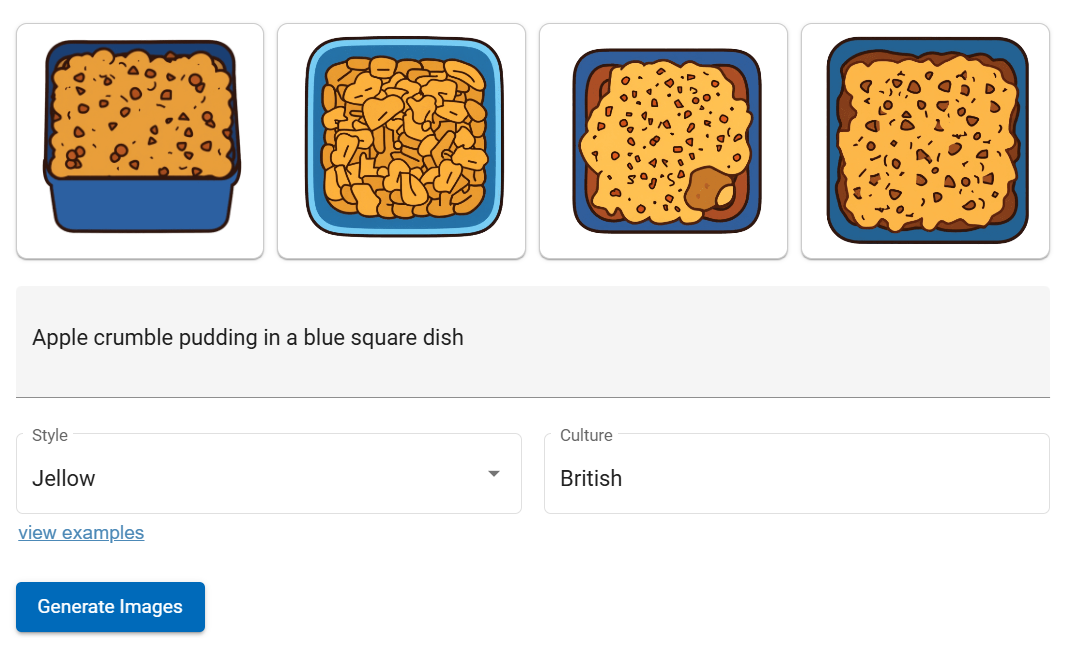
Apple crumble pudding in a blue square dish. Culture: British
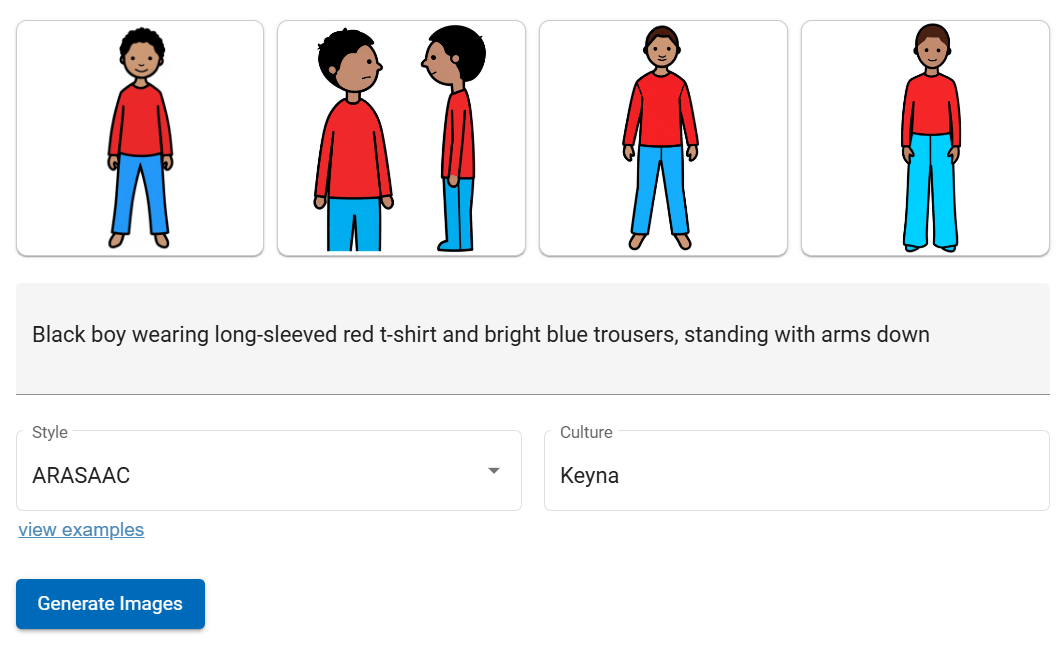
Black boy wearing long-sleeved red t-shirt and bright blue trousers, standing with arms down. Culture: Kenya
These work because they are specific and visual.
8. Cultural Adaptation
The culture field can help guide the symbol, but best results usually come from clear, visible details rather than broad labels alone.
Helpful additional details in the prompt text may include:
- a region, country, or major city
- clothing or hairstyle
- age or skin tone
- foods or home items
- landmarks or everyday settings
- visible cultural or religious items, where relevant
9. Things to Avoid
Try to avoid prompts that introduce unnecessary complexity, including:
- scenery, unless it is essential
- shadows, which can reduce clarity
- text, which can make the symbol overly complex.
Remember that symbols can have labels underneath in Board Builder.
10. Key Takeaways
The main things to remember are:
- Structure: use a structured approach to prompt writing
- Constrain: set limits through precise wording
- Test: try a prompt and review the result
- Refine: rethink the prompt and try again